Join live from home
Learn online from Lagos, Abuja, Port Harcourt or elsewhere in Nigeria. Check sessions in WAT and use recordings to revisit the teaching.
Build job-ready cloud and DevOps skills from Nigeria. Learn AWS, Terraform and Kubernetes through live weekend classes, practical projects and career support.

Our graduates work at companies and organisations including








Join from Lagos, Abuja, Port Harcourt, or elsewhere in Nigeria without relocating for a classroom. Start with Linux, networking, Git, and Python, then use those foundations to deliver an application on the cloud. Set aside a regular place and time to practise, with a laptop and a connection that supports live teaching and the practical work.
Nigeria stays on WAT, while UK clock changes can shift your local class time by an hour. Use the planner for the date you need. The 2027 timetable will be shared before enrolment.
This is a planning example, not the confirmed cohort timetable. Change the UK date and time to see the equivalent where you live.
Use Git to track a change, then Docker to package it. Learn how each tool helps you get the same application running.
The tools you'll use throughout the programme—and more.

Five modules over 20 weeks: 16 core weeks, 3 recap weeks and a bonus MLOps week. Learn Linux, Git, Python, Docker, AWS, Terraform, Kubernetes, observability, incident management and more through live lessons and practical projects.
Write automation scripts, investigate network problems and collaborate through Git.
The vast majority of cloud servers run Linux. Before you can manage infrastructure, deploy containers, or configure cloud services, you need to be fluent in the Linux command line. This week takes you from zero to navigating, managing files, and understanding the operating system that powers most of the modern internet, including AI training clusters and inference servers.
Your practical challengeBuild a bash script that monitors a specific process and automatically restarts it if it crashes. Test it by killing the process manually and watching your script bring it back. Add logging so every restart is recorded with a timestamp.
Networking is the invisible foundation of everything in the cloud. Every request, every deployment, every API call travels across a network. If you cannot debug a connectivity issue, you will be stuck on problems that take minutes to solve once you understand the fundamentals.
Your practical challengeSet up two Linux servers and configure them to communicate over a private network. Then deliberately break connectivity in three different ways (DNS, firewall, routing) and document how you diagnosed and fixed each issue.
Every piece of code and every infrastructure configuration you write needs version control. Git is the universal tool for tracking changes, collaborating with teams, and maintaining a history of your work. In the AI era, Git is not just for application code-it is for Terraform modules, Kubernetes manifests, CI/CD pipelines, and even AI model configurations.
Your practical challengeCreate a Git repository that simulates a real team workflow: create three feature branches, make conflicting changes to the same file on two branches, resolve the merge conflict, and set up a branch protection rule that requires at least one approval before merging to main.
Python is the language of cloud automation. It is how you control AWS programmatically, build infrastructure tools, integrate APIs, parse logs, and work with AI platforms. DevOps engineers who can write Python are significantly more competitive in the job market.
Your practical challengeBuild a Python script that monitors a directory for new files, automatically categorises them by extension (logs, configs, scripts), moves them into organised folders, and sends a summary to the terminal every hour. Add command-line arguments to configure the watched directory and interval.
Two sessions to revisit Linux, networking, Git and Python before Module 2. You work through troubleshooting scenarios, explain your reasoning out loud and connect the tools into one workflow.
Create a containerised application, a delivery pipeline with GitHub Actions and your first AWS environment.
Docker changed how software is deployed. Instead of 'it works on my machine' problems, Docker packages your application and everything it needs into a portable container that runs the same everywhere. Most modern companies use containers, and nearly every AI model in production runs in a container.
Your practical challengeTake one of the Python scripts you built in Week 4 and containerise it. Write an optimised Dockerfile with multi-stage builds, configure it to accept settings through environment variables, add a health check, and push the image to Docker Hub.
Real applications are not a single container. They are systems: a web server, a database, a cache, a message queue, all working together. Docker Compose lets you define and run multi-container applications with a single file.
Your practical challengeTake a real-world open source application (e.g., a WordPress site with MySQL, or a Node.js app with Redis and PostgreSQL) and write a complete Docker Compose setup from scratch. Include health checks, restart policies, proper networking, volume persistence, and security scanning. Optimise all images using multi-stage builds.
CI/CD is the heartbeat of modern software delivery. Every time code is pushed, a pipeline automatically tests it, builds containers, and deploys. This is what DevOps engineers build and maintain. This week also introduces the course project you will build throughout the bootcamp.
Your practical challengeBuild a GitHub Actions workflow for your course project that does everything: runs linting, runs tests, builds Docker images, scans for vulnerabilities, pushes to a container registry, deploys to a staging environment, runs smoke tests against staging, and then promotes to production, all triggered by a single push to main.
AWS is the world's largest cloud platform, powering everything from startups to Netflix to the majority of AI companies. This week focuses on the foundational services you will use in every single AWS project: identity, networking, storage, compute, and monitoring.
Your practical challengeDesign and build a multi-tier network architecture in AWS: a public-facing web application, a private API layer, a database that should never be accessible from the internet, and a bastion host for SSH access. Include subnet design, route tables, security groups, and a NAT gateway. Document every design decision.
Two sessions to consolidate Docker, Compose, GitHub Actions and AWS core services before Module 3. Scenario questions, live debugging and open Q&A reinforce the decisions behind each tool.
Automate AWS tasks, explain an architecture diagram, provision infrastructure with Terraform and manage Kubernetes workloads.
This week goes deeper into AWS compute and storage decisions. You will learn how to think about EC2, block and shared storage, Lambda, Spot instances, and practical AWS automation with Python and Boto3.
Your practical challengeBuild a complete 'infrastructure nuke' script with Boto3: it should list all EC2 instances, S3 buckets, and VPCs in your account, ask for confirmation, and then safely tear everything down in the correct order (instances first, then networking, then storage). Include dry-run mode and logging.
This week teaches you to think about system design clearly and communicate it well. The focus is not just architecture theory, but how to break systems down, reason about their parts, and draw architecture diagrams that other engineers can actually understand.
Your practical challengeDesign a complete architecture for a modern multi-service application: a user-facing web app, a backend API, background workers, a monitoring stack, and a data store. Define how each component communicates, where each component runs, how it scales, and what happens when any single component fails.
Terraform lets you define your entire infrastructure as code, version controlled, peer reviewed, and repeatable. Change one line and your infrastructure updates. This is how professional teams manage cloud environments without clicking through consoles, and it is the foundation of every self-service platform engineering approach in use today.
Your practical challengeCreate a Terraform module library for your course project: build reusable modules for VPC, EC2, S3, and security groups. Each module should accept variables for different environments. Deploy your entire project infrastructure to a 'dev' environment using only `terraform apply` with a variables file. Then create a CI/CD pipeline that runs `terraform plan` on every PR and `terraform apply` on merge to main.
Docker runs individual containers. Kubernetes runs hundreds of them, automatically scaling, healing, and load balancing your applications. It is the operating system for the cloud era, and it is the technology that makes large-scale infrastructure possible.
Your practical challengeDeploy your course project on Kubernetes: create Deployments for each service, configure Services for internal communication, set up an Ingress for external access, add persistent storage for your database, and implement network policies that restrict which Pods can talk to each other. Package everything as a Helm chart.
Two sessions to consolidate AWS automation, architecture design, Terraform and Kubernetes before Module 4. You explain concepts back to the group and work through real cluster scenarios.
Release through ArgoCD, investigate an incident, apply access controls and secrets management, and explain your work to employers.
Turn the Kubernetes manifests built in Week 14 into repeatable Helm releases, then use ArgoCD to reconcile Ledgeway from Git rather than relying on manual cluster changes.
Your practical challengePackage the Ledgeway Kubernetes resources as a Helm chart with separate environment values, then implement a GitOps workflow: install ArgoCD, configure an Application to watch the Git source, and demonstrate a reviewed change flowing from Git to the dev cluster. Document a safe promotion path from dev to staging and production.
You can't fix what you can't see. Build a complete observability platform for Ledgeway: deploy Prometheus, Grafana, Loki, and Tempo, instrument every service with application metrics and distributed traces, and investigate a real incident from alert to root cause without leaving Grafana.
Your practical challengeInstrument your course project with full observability: deploy the stack, add prom-client metrics to at least two services, add OTel tracing to at least two services, and demonstrate a complete incident investigation: start from a Grafana error rate panel, find the error in Loki, and click through to the Tempo trace showing which span caused the failure.
A running platform is not a secure platform. This week you make Ledgeway defensible: policy as code with OPA Gatekeeper, secrets hygiene with AWS Secrets Manager and the External Secrets Operator, identity scoping with RBAC, network isolation with NetworkPolicies, and a live incident response drill using the observability stack you built in Week 17.
Your practical challengeHarden the Ledgeway dev namespace end to end: write a Gatekeeper ConstraintTemplate that blocks any pod using the `latest` image tag; write a NetworkPolicy that allows only `ledgeway-api-gateway` to reach `ledgeway-auth-service` on port 4010 and verify that a test pod without the right label is blocked; add a second ExternalSecret for a new secret path in Secrets Manager and verify the K8s Secret appears and is deleted when the ExternalSecret is removed. Document the blast radius of your changes: what could an attacker do before vs. after.
The final week. Two open, discussion-led sessions that look back at the full bootcamp and forward at what comes next. Session 1 includes a retrospective slide deck; both sessions centre on honest conversation about what was built, what it means and what to do next.
Understand how MLOps extends your DevOps skills into AI infrastructure.
The final bonus session: an infrastructure-focused introduction to MLOps, showing how familiar DevOps practices support machine-learning data, training, model delivery, inference and monitoring-followed by the bootcamp outro.
Your practical challengeBuild a complete MLOps pipeline: train a model, track the experiment in MLflow, register it in the model registry, deploy it as a containerised API on Kubernetes, set up monitoring for inference metrics, implement drift detection, and create a CI/CD pipeline that automatically retrains and redeploys when drift is detected. Document the entire architecture.
Cloud computing and DevOps are among the skills covered by Nigeria's 3MTT initiative. CloudPros offers its own live course, where you build applications, automate deployments and practise troubleshooting. Use that work in your portfolio and prepare to discuss it in interviews.
Keep scripts, configuration, and notes in Git. Break work into repeatable steps so you can continue after an interruption. Test your laptop and connection before each live session.
Build your Git workflowTrack the services you start, set billing alerts and remove resources after each exercise. These are part of responsible cloud practice. Confirmed 2027 tuition and any separate lab costs will be shared before enrolment.
Use the AWS lab cost checklistDocument the problem, your deployment, and the result of your tests. Use CV reviews and mock interviews to explain that work when approaching Nigerian employers or remote opportunities.
Build a portfolio an engineer can followLearn with a live instructor, build projects you can show and prepare for your next technical role.
Learn online from Lagos, Abuja, Port Harcourt or elsewhere in Nigeria. Check sessions in WAT and use recordings to revisit the teaching.
Write automation scripts, deploy an application on AWS and manage infrastructure with Terraform. Keep your code and project notes together in Git.
Get CV and LinkedIn reviews and mock interviews. Learn to explain the work you've done and how you approached technical problems.
Bring a laptop, curiosity, and time to practise. We start with the basics, whether you're changing careers or building on what you already know.
Learn Linux, networking, and Git before you get into cloud services. Python is introduced from the fundamentals, with examples focused on automation.
Build on your troubleshooting experience. Add scripting, infrastructure as code, containers, and the delivery practices used by engineering teams.
Understand the environment your code runs in. Learn to package applications, design delivery pipelines, and investigate operational problems.
Connect gaps across the stack, from Terraform and Kubernetes to GitOps and observability. Use the projects to examine the reasoning behind your existing habits.
Career changers, first-time engineers, and people strengthening the skills they already use at work.
Sidar CloudPros graduate
Kevin CloudPros graduate
AkaateCloudPros graduate
I tried learning DevOps on my own for months and got nowhere. Then I found Kunle's bootcamp and everything clicked. He explains things in a way that just makes sense, never rushing through the hard parts. Got my first DevOps job three weeks after finishing.
 CloudPros graduate
Best investment I've made in my career. Kunle doesn't just teach you commands, he makes sure you actually get what's happening under the hood. The GitHub Actions and Terraform modules were game changers.
 CloudPros graduate
I've been doing DevOps for years but had some knowledge gaps. This intermediate course was perfect. The Kubernetes and GitOps sections cleared up so many things I'd been confused about.
CloudPros graduate
The DevOps Dude · DevOps & SRE · 11+ years of experience
Olakunle brings more than 11 years of experience in DevOps and site reliability engineering into the classroom. His approach is practical: enough theory to understand the system, then time spent building, testing, and troubleshooting it.
You'll work through the reasoning behind a command, the tradeoffs in an architecture, and the questions to ask when a deployment goes wrong. In a class of 15, there's room to slow down and work through what hasn't clicked yet.
Join the online cloud and DevOps bootcamp from the USA, UK, Canada, Australia, Ireland, Nigeria, or wherever you're learning. Teaching is in English, with live weekend sessions and recordings to revisit.
We'll share the 2027 timetable before enrolment, so you can plan around your local time.
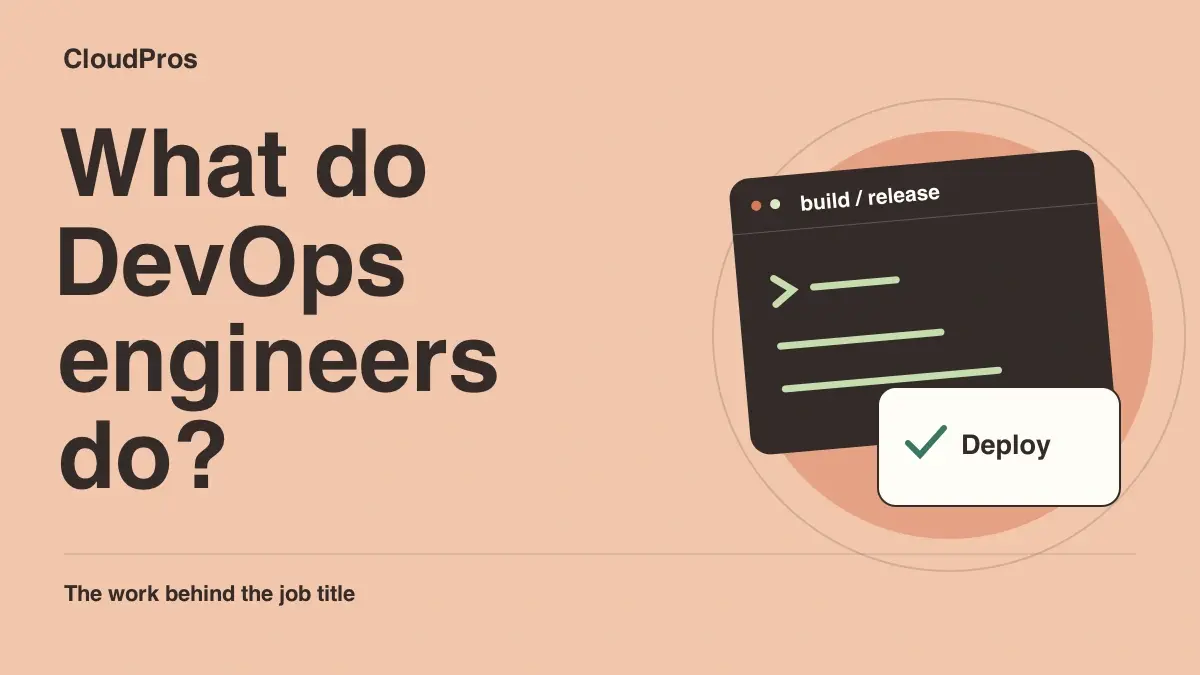
Understand the daily work: automation, delivery pipelines, infrastructure, and troubleshooting.
Read the guide
Plan the skills to learn, the projects to build and your first applications.
Read the guide
Compare learning formats, AWS training and practical projects before choosing your first cloud course.
Read the guideClasses, projects, career support and how to join.
Talk to CloudProsYes. Start with Linux, networking, Git and Python, then learn to build and run applications on AWS. The course includes live teaching, practical projects and career support.
CloudPros brings live teaching, practical AWS and DevOps projects and help preparing for applications together in a 20-week course, rated 5/5 from 50+ student reviews. Beginners start with Linux, networking, Git and Python.
No. You can join from anywhere in Nigeria. You need a laptop, internet access and time for live lessons and practical work.
UK clock changes can shift the Nigerian class time by an hour. Check the WAT time for each session when the timetable is announced.
CloudPros is an independent training programme with its own instructor, curriculum and enrolment.
A laptop for coding, containers and cloud tools, plus an internet connection for live classes. Save your work in Git and use recordings to revisit lessons.
Build practical cloud and DevOps projects, improve your CV and LinkedIn profile, and practise technical interviews. You'll learn to explain what you built and how you solved problems.
We'll confirm tuition, billing currency, payment options and any separate lab costs before enrolment. Join the free 2027 waitlist for the details.
CloudPros is a live online DevOps and cloud engineering bootcamp running over 20 weeks in total, organised into five modules: 16 core weeks, three recap weeks (weeks 5, 10 and 15) that close the first three modules, and a bonus MLOps week in week 20. You learn Linux, networking, Git, Python, Docker, GitHub Actions, AWS, Terraform, Kubernetes, GitOps, observability, and security through live teaching and practical work. Each cohort is limited to 15 learners.
Yes. You do not need a computer science degree or previous DevOps experience. The course starts with Linux, networking, and Git, then introduces Python in week 4. You will need a laptop, a reliable internet connection, and time to practise. If you already work in development, IT support, or systems administration, you can build on that experience.
Your work progresses from Linux automation scripts and networking troubleshooting to containerised applications, CI/CD pipelines, AWS infrastructure, and Kubernetes deployments. You will practise infrastructure as code, monitoring, and security, and document the decisions behind your work. The bonus MLOps week applies these skills to a model-serving pipeline.
You get CV and résumé reviews, help with your LinkedIn profile, and mock interviews. Practise explaining your projects and technical decisions so you can talk confidently about your work with employers.
Week 20 is Module 5, a dedicated bonus week after the 16 core weeks and three recap weeks. It covers machine learning infrastructure: experiment tracking with MLflow, model registries, containerised model serving, Kubernetes workloads, monitoring, and drift detection. It builds directly on the deployment and operations skills taught during the core programme.
The 2027 waitlist is open. Join for the start date, class times and application details when enrolment opens. It is free to join.
The 2027 cohort waitlist is open. Get the dates, fees and application details when enrolment opens.
Free to join.Have a question about the course or the community? Get in touch.